
Planet Viewing Calendar 2025-2026 | Jupiter, Saturn, Mars & Venus
If you want to observe Jupiter, Saturn, Mars, or Venus in 2025-2026, the most reliable approach is knowing what time and which direction to look each month. Planets are bright, but their visibility windows shift dramatically with the seasons, which means staring at a star chart alone won't always lead you to them.
This article organizes the prime viewing periods for all four planets into a single quick-reference table and month-by-month calendar, based on JST (UTC+9) from Tokyo. It covers Mars at its closest in January 2025, Jupiter reaching opposition in January 2026, Saturn's razor-thin rings, and Venus switching between morning and evening appearances. Whether you're using the naked eye, binoculars, or a telescope, once you understand what to expect at each stage and the common mistakes that trip beginners up, you'll be able to say "tonight, I'm going after this planet" without hesitation.
2025-2026 Planet Visibility Quick Reference | When Can You See Jupiter, Saturn, Mars & Venus?
How "Prime Viewing" Is Defined, with a Note on Tokyo-Based Times
"Prime viewing" here means the period when a planet is bright and climbs high enough in the sky during convenient hours. For beginners especially, the practical question isn't just brightness; it's whether the planet is up after dinner or whether it's stuck too low in the pre-dawn sky. From years of guiding observation sessions, I've found that even a first-Magnitude star gets overlooked when it sits near the horizon, while something as prominent as Jupiter or Venus practically introduces itself.
Directions and times are approximate for Tokyo (JST, UTC+9). Even within Japan, latitude and horizon obstructions change the picture, and low-altitude planets like Venus are especially sensitive to these differences. In cities, buildings block the view; in rural areas, mountain ridges do the same. Treat this table as a tool for knowing when your odds are best, not a guarantee for every location.
One more distinction worth noting upfront: Jupiter, Saturn, and Mars can all appear during nighttime hours, but Venus is an inferior planet, so it only shows up in the western sky after sunset or the eastern sky before sunrise, never in the middle of the night. Keeping this in mind prevents the classic beginner mistake of scanning for Venus at midnight and coming up empty.
| Planet | Prime Months | Best Viewing Window | Primary Direction (Tokyo) | Difficulty Level | Recommended Gear |
|---|---|---|---|---|---|
| Jupiter | Dec 2025 - May 2026 | Evening through midnight | East to south to west | 1-2 | Naked eye, binoculars, telescope |
| Saturn | Aug - Nov 2025 | Evening | South to southwest | 1 (finding) / 3 (ring observation) | Naked eye, telescope |
| Mars | Around Jan 2025 | After sunset through pre-dawn, especially early-to-mid evening | East to south to west | 1-2 | Naked eye, binoculars, telescope |
| Venus | Apr - Nov 2025, Apr - Aug 2026 | 2025: pre-dawn only; 2026: evening only | 2025: low in the east; 2026: low in the west | 1 | Naked eye, binoculars |
Jupiter is the most consistently recommendable planet for the 2025-2026 season. AstroArts' Jupiter guide (2025-2026) lists December 2025 through around May 2026 as the prime observing window, with brightness reaching about Magnitude -2.5. It rises in the east as evening begins, crosses south through the middle of the night, and sets in the west by dawn, making it intuitive to track. Binoculars reveal the Galilean moons lined up alongside it, and a telescope brings out the cloud bands and even the Great Red Spot.
Saturn's season centers on autumn 2025. It reaches opposition on September 21, 2025, so from August through November it's well placed in the south to southwest during evening hours. At about first Magnitude, it's easy enough to spot with the naked eye, but this year's real talking point is its unusually thin rings. The National Astronomical Observatory of Japan's Saturn guide (September 2025) confirms that while Saturn is at prime viewing, the rings are narrower than usual. By late November 2025, the ring tilt reaches a minimum, giving them an almost edge-on appearance. Anyone peering through a telescope expecting the classic wide-open rings will find the view surprisingly slender.
Mars has its peak around January 2025. According to the National Astronomical Observatory of Japan's Mars closest approach guide (January 2025), the closest approach occurs around 11:00 PM JST on January 12, 2025, with brightness holding near Magnitude -1.4 from January 8-22 and reaching -1.5 on January 15 and 16. Its reddish hue makes it easy to pick out by eye, and during closest approach it rises high early in the evening, creating good observing conditions. That said, this is not a "great opposition"; it's a relatively distant close approach, with an apparent diameter of about 14.6 arcseconds. After spring, Mars fades quickly, and even through a telescope the disk shrinks to something underwhelming. The contrast with January's brightness makes the decline feel all the more dramatic.
Venus is the brightest of the four and the most time-constrained. In 2025, it's a morning star; the prime window runs from mid-April through mid-October. It appears low in the eastern sky, and around late July, Tokyo observers get the best conditions, with Venus reaching its highest altitude about 45 minutes before sunrise. In 2026, Venus switches to an evening star, prominent in the low western sky from early April through late August. Mid-June 2026 offers the best balance of altitude and visibility from Tokyo. Comparing AstroArts' morning star guide (2025) and evening star guide (2026) makes one thing clear: the same planet swaps between "look for it at dawn" and "catch it at dusk" from year to year. Since Venus never appears at midnight, trying to fold it into a late-night session with Jupiter or Saturn will only lead to frustration.
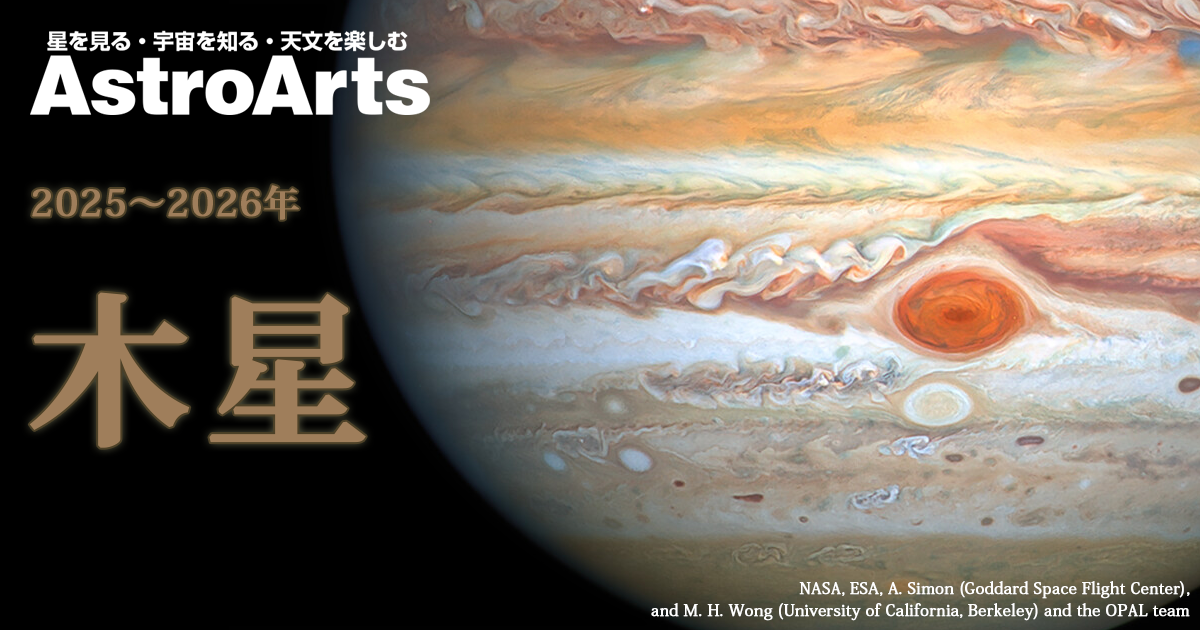
【特集】木星(2025~2026年) - アストロアーツ
2025年から2026年の木星は12月~5月ごろが観察の好期です。とても明るいので街中でも簡単に見つけられます。ガリレオ衛星や木星表面の縞模様、大赤斑を見たり撮ったりしてみましょう。
www.astroarts.co.jpDifficulty Level and Gear Legend
The Levels in this quick reference separate two things: how hard it is to find a planet versus how hard it is to appreciate its best features. Saturn, for example, isn't difficult to locate with the naked eye, but experiencing its rings requires a telescope, so the finding Level and observing Level differ.
| Level | Guideline | Typical Example | Recommended Gear |
|---|---|---|---|
| 1 | Easy to find by eye | Venus, Jupiter in prime season, Mars near opposition, locating Saturn | Naked eye |
| 2 | Easy to find by eye; binoculars add to the experience | Jupiter's moons, confirming Mars' color | Binoculars |
| 3 | Easy to find, but a telescope is needed for the main attraction | Saturn's rings, beginner-level Jupiter cloud bands | Telescope |
| 4 | Requires a telescope and selective conditions | Distinguishing surface markings on Mars | Telescope |
| 5 | Advanced detail work | Beyond the scope of this four-planet guide | Telescope |
By these standards, Jupiter and Venus are the best entry points for 2025-2026. Jupiter is bright and easy to locate, and the moment you point binoculars at it, it stops being just a dot. Venus is so overwhelmingly bright that it stands out even when the sky isn't fully dark. Saturn, on the other hand, is less about finding it and more about what you see through the eyepiece. Mars delivers a sharp peak in January, and if you miss it, the experience changes noticeably. Keeping these expectations in mind saves a lot of disappointment.
In practice, beginners often try to do everything with the naked eye and end up thinking, "I saw it, but what's the big deal?" Pairing binoculars with Jupiter and a telescope with Saturn, adjusting your gear to match each planet, makes a huge difference in satisfaction. Saturn's rings are especially thin in 2025, so even with a telescope, dialing back expectations from the dramatic images you've seen online will bring your mental picture closer to reality. Jupiter, meanwhile, rewards even modest equipment; just watching the moons shift position is enough to feel the pull of planetary astronomy.
Month-by-Month Planet Calendar: Jupiter, Saturn, Mars & Venus
Jupiter: The Star of Winter Through Spring
Jupiter's most reliable window runs from December 2025 through around May 2026. AstroArts' guide confirms this as the prime period, with brightness near Magnitude -2.5. Even under city skies, it commands attention, making it the easiest planet to start with. At public observation events, when I ask newcomers to find their first target, Jupiter is the one that gets a nod of recognition almost every time, even from people who can't name a single constellation.
Month by month: in December 2025, Jupiter stands out in the eastern evening sky. By opposition on January 10, 2026, it's visible from east at dusk, south at midnight, and west by dawn, sweeping across the full sky. January and February offer the most scheduling flexibility: catch it after dinner, or wait until later when it's higher in the south. Through March and April, the best viewing window gradually shifts earlier, with Jupiter settling into the south during the early evening. By May, it drops toward the west sooner, and the season starts winding down.
Rather than memorizing monthly positions, the key pattern is simple: "evening: east; midnight: south; dawn: west." With the naked eye, its sheer brightness is the draw. Binoculars show the moons. A telescope reveals the cloud bands. Each step up in gear unlocks something new. If you're picking just one target from winter through spring, Jupiter is the hardest to get wrong.
Saturn: Thin Rings in 2025
Saturn's season peaks around its opposition on September 21, 2025, with late summer through autumn as the main event. At about first Magnitude, it's straightforward to spot by eye, but this year's highlight goes beyond brightness: it's all about the rings. 2025 is a thin-ring year, and anyone expecting the classic wide halo will see something quite different through the eyepiece.
In spring, the rings reach edge-on orientation as seen from Earth around March 24, 2025, effectively vanishing. As summer progresses, Saturn itself becomes easier to observe from late night into the pre-dawn hours. By August, it's visible in the southeast to south from late evening through the small hours. Around September's opposition, it's up from dusk to dawn, essentially all night. The sweet spot for beginners is September through October, when Saturn sits conveniently in the south to southwest during evening hours. November shifts it further into the southwest, making timing easier, but the rings grow even more subtle.
The date to circle is around November 24, 2025, when the ring tilt hits its minimum. As AstroArts' article on Saturn's near-ring-disappearance notes, conditions during this period can make the rings look remarkably faint. For 2026, the next opposition falls on October 4, so favorable viewing continues, but 2025 stands out as the year when Saturn is easy to find yet its rings are far from showy. That combination makes it a genuinely unusual observing year.
2025年11月24日 土星の環の準消失
2025年11月24日、地球から見て土星がほぼ真横を向き、前後の期間は環がほとんど見えなくなる。
www.astroarts.co.jpMars: January 2025 Is the Window
Mars has the sharpest peak of the four planets. The high point is its closest approach around 11:00 PM JST on January 12, 2025. The National Astronomical Observatory of Japan's guide lists the closest approach distance at roughly 96.08 million km with an apparent diameter of about 14.6 arcseconds. Brightness hovers near Magnitude -1.4 from January 8-22, peaking at -1.5 on January 15-16, making it visible without any equipment. This is not a great opposition, though; it's a relatively distant minor close approach.
The viewing arc runs from late 2024 into January 2025 at peak intensity. Mars rises in the east after sunset, crosses south overnight, and sets in the west before dawn. January's conditions are favorable, with the planet high enough in the early evening to start observing without staying up late. February still offers decent visibility, but after the sharpness of January, things feel noticeably quieter. From March through April, brightness and apparent size decline steadily; you can still spot the color, but the "Mars is looming" sensation fades.
Every Mars opposition feels this way to me: the close-approach period hits hard, then the planet retreats faster than you'd expect. The red beacon of January gradually becomes a planet that's identifiable but clearly past its prime. For 2025, the most practical way to think about Mars is as a planet to enjoy in and around January, with a few surrounding months as a bonus, rather than a year-round target.
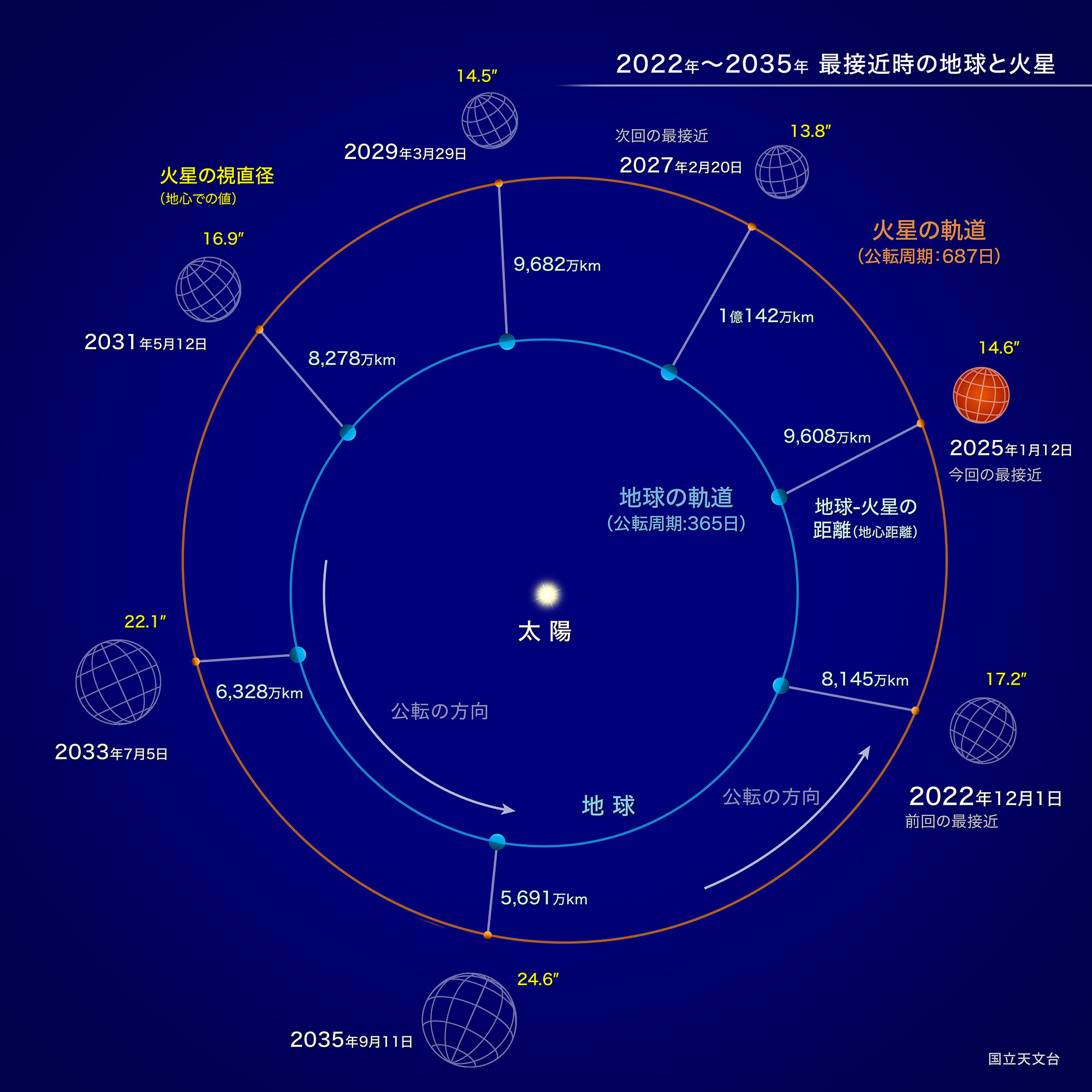
火星が地球に最接近(2025年1月) | 国立天文台(NAOJ)
火星は約2年2カ月ごとに観察の好機を迎えます。今回の火星と地球の最接近は1月12日23時頃です。
www.nao.ac.jpVenus: Morning in 2025, Evening in 2026
The headline for Venus on the annual calendar is straightforward: 2025 is the morning star year, 2026 is the evening star year. As noted earlier, Venus is an inferior planet that stays close to the Sun, so it never appears at midnight. Unlike Jupiter or Mars, you can't just look up "sometime during the night." You need to know whether it's a dawn season or a dusk season first.
In 2025, the pre-dawn eastern sky is where Venus lives from spring through autumn. AstroArts' morning star guide (2025) puts the prime window at mid-April through mid-October, with greatest western elongation on June 1. April and May require scanning low in the east, but conditions improve through June and July. By late July, Venus reaches about 25 degrees altitude 45 minutes before sunrise from Tokyo, which is comfortable to observe. August remains good, and September through October sees a gradual decline.
In 2026, the script flips. Venus dominates the western evening sky from spring through summer. AstroArts' evening star guide (2026) sets the prime window at early April through late August, with Tokyo altitude reaching about 20 degrees 45 minutes after sunset around mid-June. April builds momentum in the post-sunset western sky. May and June hit the sweet spot of height and convenience. July and August become a race against the planet setting low in the west, shrinking the observation window.
💡 Tip
A simple way to keep it straight: Venus is the early riser's planet in 2025 and the after-work planet in 2026. What trips people up across the calendar isn't brightness; it's the timing switch.
Venus may be the brightest of the four, but planning around it requires more care. Lock in the 2025 = pre-dawn, 2026 = post-sunset distinction, and you'll avoid the frustration of heading out at the wrong hour.
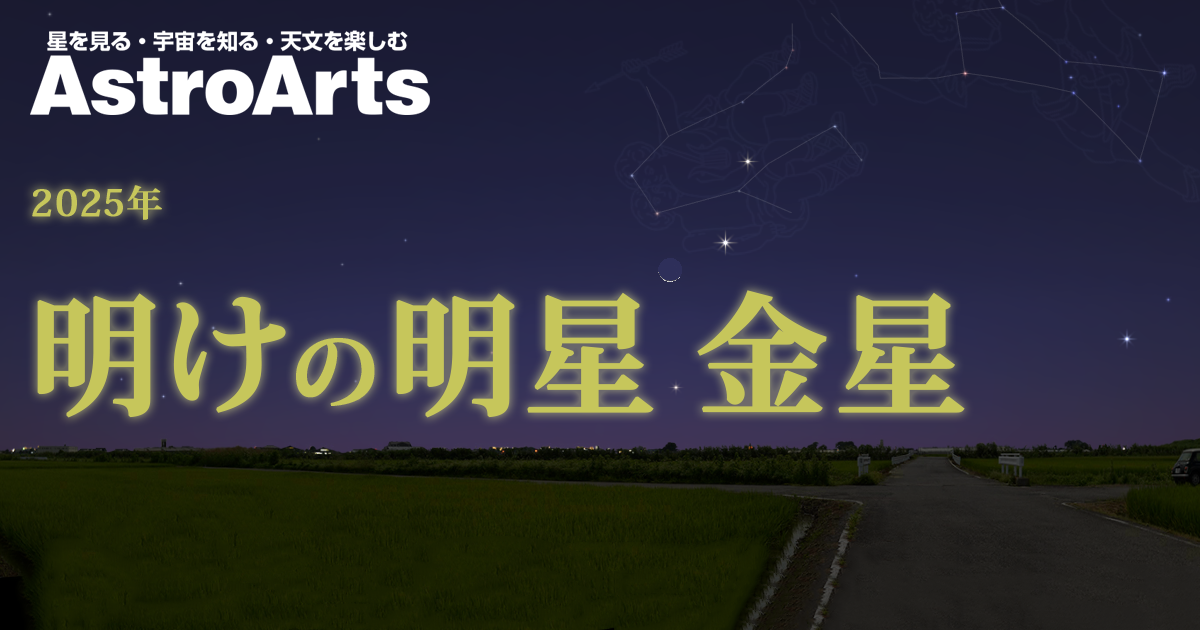
【特集】明けの明星 金星(2025年) - アストロアーツ
2025年の4月ごろから11月ごろまで、明けの明星の金星が明け方の東の空に輝きます。時おり細い月と並ぶ光景は、とくに美しい眺めです。肉眼や双眼鏡で観望したり、写真に撮ったりしてみましょう。
www.astroarts.co.jpWhich Planet Should You Observe This Month? A Seasonal Guide
Breaking the calendar into seasons makes it much easier for beginners to pick a target without overthinking. For each season below, I've listed a single top pick first. If your schedule is tight, aim for Venus within an hour of sunrise or sunset, or Jupiter or Saturn between 9 and 11 PM, depending on the season and conditions.
Winter 2025 (December-February): What to Observe
If you pick just one, go with Jupiter. The reasons are simple: it's bright and easy to find, it's well-placed during convenient evening hours, and binoculars or a telescope both add to the experience. Jupiter tracks from east to south through these months, and you don't need to stay up late to get a satisfying session. AstroArts' guide confirms Jupiter at Magnitude -2.5 during its prime window of December 2025 through May 2026. For beginners, the biggest advantage of winter Jupiter is that heading out in the early evening almost guarantees a result.
The runner-up is Mars, especially in January 2025, when its reddish glow is hard to miss. It's visible for most of the night, with the first half of the evening through midnight offering the widest window. Mars doesn't have Jupiter's night-after-night consistency, but during this period it genuinely stands out.
If you're an early riser, Venus is also a strong option, though it's more of a bonus than the winter headliner. It's not a before-bed target; think of it as a check-the-eastern-sky-when-you-wake-up target. At observation events, beginners often assume "bright = visible at night," but Venus, when the timing is right, is the single easiest planet to spot.
Summer 2025 (June-August): What to Observe
If you pick just one, go with Venus. Summer 2025 is the season when beginners get the quickest payoff from the pre-dawn sky. Venus is overwhelmingly bright, a short observation session is all you need, and by late July its altitude climbs high enough to be truly easy. AstroArts' morning star guide (2025) puts greatest western elongation on June 1 and notes that by late July, Venus stands about 25 degrees above the eastern horizon 45 minutes before sunrise from Tokyo. That intense beacon in the summer dawn is the fastest route to a "yes, I found a planet" moment.
The runner-up is Saturn. In the first half of summer, it's a late-night to pre-dawn target; as the season progresses, it becomes accessible earlier in the evening. It doesn't dazzle the way Venus does, but through a telescope, it's in a class of its own. Naked-eye discovery is easier with Venus, but in terms of observing satisfaction, Saturn enters its strongest stretch here.
For the time-pressed: Venus within an hour of sunrise is the most realistic choice. No late nights required, and the session can be brief. If evenings are your only free time, Saturn in the late-night slot is the alternative. Summer boils down to "mornings = Venus, late nights = Saturn."
Autumn 2025 (September-November): What to Observe
If you pick just one, go with Saturn. Autumn 2025 belongs to Saturn. It sits in the south to southwest during evening hours, it's accessible after work or school, and even beginners can set a clear target for the night. The National Astronomical Observatory of Japan confirms opposition on September 21, 2025, placing autumn squarely in the prime window. At about first Magnitude, Saturn is easy to find, and the convenience of evening viewing in the southern sky is a major plus.
The thing to know about this year's Saturn is that by late November, the rings become extremely thin and hard to see. The prime window continues, but anyone expecting a classic wide-ring view will find the eyepiece image more understated than anticipated. Around November 24, 2025, the ring tilt is at its smallest, so whether a first-time telescope user knows "this is a thin-ring year" genuinely changes the experience. In short, autumn 2025 Saturn is easy to find but visually unusual.
If you can manage early mornings, Venus remains a candidate. The pre-dawn eastern sky stays favorable through around November, so dawn-friendly observers still have a viable target. But narrowing to a single pick, Saturn wins on scheduling convenience. For beginners who want something to aim at between 9 and 11 PM, autumn 2025 is essentially a one-planet season.
ℹ️ Note
Short on time? Autumn 2025: Saturn between 9-11 PM. Early riser? Venus within an hour of sunrise. Pick whichever fits your schedule.
土星が見頃(2025年9月) | 国立天文台(NAOJ)
2025年9月21日に土星が「衝(しょう)」となり、観望の好機を迎えます。
www.nao.ac.jpSpring-Summer 2026 (March-August): What to Observe
The flow shifts during this stretch. From March through May, Jupiter is in its farewell window, and from April through August, Venus takes over as the convenience pick. Viewed as a single block, this period can seem confusing, but it breaks down cleanly: "early spring = Jupiter," "late spring onward = Venus."
Across the full period, Venus is the top pick. In 2026, Venus is an evening star that's easy to catch after sunset, keeping the barrier to entry low. AstroArts' evening star guide (2026) lists the prime window as early April through late August, with altitude reaching about 20 degrees 45 minutes after sunset from Tokyo around mid-June. You can spot it on the way home from work or during an evening walk. The 2025 morning Venus required early wake-ups; the 2026 evening Venus fits naturally into most daily routines, and that's a significant difference.
That said, if you're only looking at early spring, Jupiter is still worth your time. It's in the final stretch of its winter run, enjoyable as a farewell opportunity through around May. Jupiter's inherent brightness and evening-friendly positioning make it approachable even for complete beginners. I often feel that at seasonal transitions, Jupiter works best as a "catch it while you can" target, while Venus is the "this one will be around for a while" companion.
From summer onward, Saturn reasserts itself. Early in this stretch, it's a late-night target that gradually shifts into evening hours as the season advances. So the beginner's priority order for spring-summer 2026 is: Venus as the default, Jupiter for the spring farewell, Saturn if you can stay up late. With limited time, Venus within an hour of sunset remains the most practical choice.
【特集】宵の明星 金星(2026年) - アストロアーツ
2026年3月ごろから9月ごろまで、宵の明星の金星が夕方の西の空に輝きます。時おり細い月と並ぶ光景は、とくに美しい眺めです。肉眼や双眼鏡で観望したり、写真に撮ったりしてみましょう。
www.astroarts.co.jpHow to Find Planets | Tips Using Direction, Time & Brightness
Start with the Naked Eye: Look for a Bright Star That Doesn't Twinkle
When hunting for planets, narrowing your candidates fast is the key. The first thing I tell people at observation sessions is to search using three criteria: "doesn't twinkle much," "bright," and "sits along the ecliptic." Stars flicker because atmospheric turbulence scatters their point-source light, while planets, which present a tiny disk, appear to shine more steadily. On calm nights, the difference is surprisingly easy to notice.
Adding a brightness comparison sharpens the search further. Venus can reach Magnitude -4 and beyond, an unmistakable blaze that leaves no doubt once you're looking in the right direction. Jupiter reaches about Magnitude -2.5 during peak season, standing out clearly. Mars brightens to the Magnitude -1 range during close approach, with a faintly reddish tint. Saturn, at roughly Magnitude 1, isn't as dramatic as Venus or Jupiter but holds its own among first-Magnitude stars. The practical sequence for a naked-eye search: pick out the brightest star-like objects first, then keep the ones that twinkle the least.
In practice, beginners often feel overwhelmed because "there are so many bright stars." When that happens, resist the urge to scan the entire sky at once. Instead, start from the low sky in the direction appropriate for the time, and work upward. Planets near the Sun, like Venus, obviously sit low, but even Jupiter and Saturn spend parts of their seasons near the eastern or western horizon. Low-altitude planets are easily blocked by buildings and hills, so on nights when you're targeting the east or west, a location with an open horizon beats a balcony every time.
This is where a smartphone planetarium app becomes invaluable. Stellarium (official site: https://stellarium.org) and Star Walk are well-known options, though features and pricing change, so check the official pages for current details. The workflow is straightforward: set your location, dial in the date and time, then note the target planet's azimuth and altitude. Armed with a mental picture like "low in the east" or "mid-height in the southwest," you'll close in on the planet much faster once you're outside. At observation events, I've seen people cut their search time dramatically just by previewing the app indoors first.
💡 Tip
Use a planetarium app indoors before you head out: confirm the time, direction, and altitude. At the observation site, rely on that mental note and search with your eyes first. You'll spend less time staring at a screen and more time actually looking at the sky.
The Moon as a Signpost: Using Conjunction Dates
For a near-guaranteed find, planetary conjunctions with the Moon are your best friend. Everyone can locate the Moon, so on conjunction nights, the strategy reduces to "check for a bright, steady object near the Moon." Even people who normally have no idea where to look in the sky suddenly find planets easy when the Moon gives them a starting point.
The method is simple: check an astronomy calendar or app for dates when the Moon passes near a planet, then search the area around the Moon at the corresponding time. If you spot a bright point nearby that doesn't twinkle and sits along the ecliptic, chances are good it's a planet. Venus and Jupiter are especially obvious near the Moon; Mars and Saturn are trickier on their own but become much easier with the Moon as a reference.
The most common failure mode: the planet should be near the Moon, but you can't see it. Usually the culprit is the planet sitting low enough that buildings, hills, or power lines block it. The Moon may be visible while the planet just below it is hidden. This is especially common in the pre-dawn east and post-sunset west, where horizon obstructions matter more than sky brightness. On conjunction nights, whether the horizon is clear matters as much as whether the sky is dark.
The Moon moves fast, so conjunction dates work best as "tonight's shortcut" rather than a multi-day strategy. Preview the Moon-planet geometry in an app, find the Moon on-site, then scan nearby for a bright candidate. If it's steady, sits on the ecliptic, and outshines its neighbors, even a beginner can be fairly confident they've found the right target. This turns planet-hunting from vague sky-gazing into a focused search with a concrete objective.
Quick Glossary
These terms come up throughout the article, and understanding them makes the quick-reference table and calendar much easier to read. At observation events, I've found that once someone grasps these definitions, the reasoning behind "why now is prime viewing" clicks into place.
Opposition
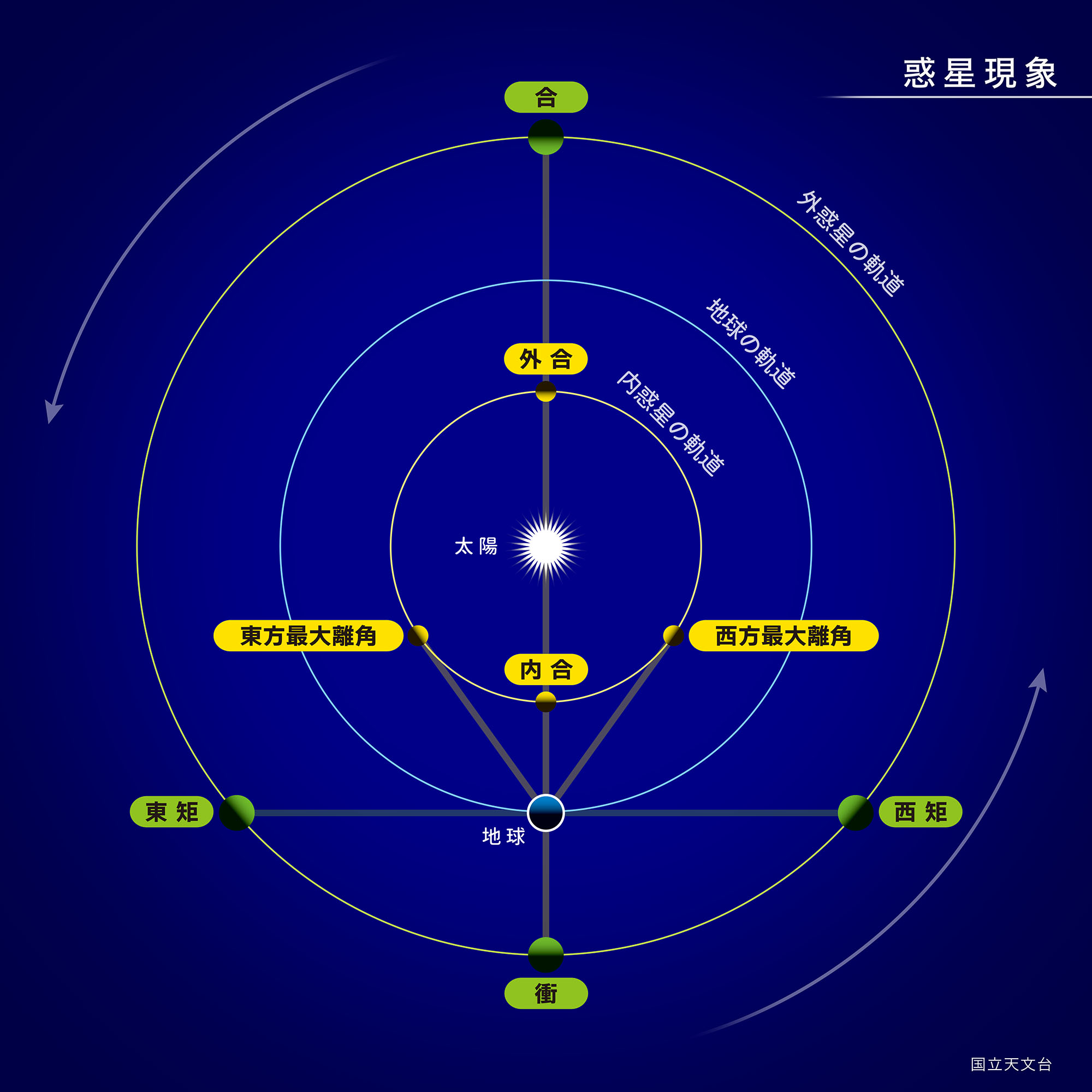
Opposition is the configuration where an outer planet sits directly opposite the Sun as seen from Earth. It applies to outer planets like Jupiter, Saturn, and Mars. During opposition, the planet rises around sunset and sets around sunrise, making it observable throughout the night. Think of it as the signal that a planet has entered its best annual viewing period.
In practical terms, the weeks surrounding opposition are when observing plans come together most easily. Saturn reaches opposition on September 21, 2025, so evenings before and after that date offer convenient southern-sky viewing, ideal for targeting the rings with a telescope. Jupiter follows the same logic, with conditions building around its own opposition date.
Greatest Elongation
Greatest elongation marks the moment when an inferior planet reaches its widest apparent separation from the Sun. Venus orbits closer to the Sun than Earth, so it never reaches the midnight sky. It's only visible before sunrise or after sunset, and greatest elongation is when that angular distance from the Sun is at its maximum, allowing the planet to climb higher and become easier to spot.
For Venus in 2025, greatest western elongation falls on June 1. That year, Venus shines as a morning star, growing prominent in the eastern sky from spring through autumn. In 2026, the evening star phase takes over. Rather than assuming "Venus is always an evening object," remember that greatest elongation is the cue that Venus is at its easiest to observe, wherever it happens to be in its cycle.
Magnitude
Magnitude is the unit used to express a celestial object's brightness. It's somewhat counterintuitive: lower numbers mean brighter, and negative values indicate very bright objects. Once you internalize this scale, the numbers in the quick-reference table translate directly into "how easy is this to find."
For reference, Jupiter reaches about Magnitude -2.5, making it a standout in any sky. Venus can exceed Magnitude -4, bright enough to pierce twilight. Saturn sits around Magnitude 1, clearly visible but without the punch of Jupiter or Venus. At an actual observing site, Venus looks like "one light that's in a league of its own," Jupiter reads as "the brightest star-like object in the night sky," and Saturn comes across as "a calm, yellowish-white star."
ℹ️ Note
Magnitude trips people up because the scale runs backward. A handy way to remember: Magnitude 1 is dimmer than 0, and -1 is brighter than 0. Line them up that way and the system makes sense.
Apparent Diameter
Apparent diameter expresses a celestial object's angular size as seen from Earth. Through a telescope, it determines whether a planet looks like a featureless point or a recognizable disk. Naked-eye observation is dominated by brightness differences, but at the eyepiece, apparent diameter drives the experience.
Mars is the planet where this number matters most visibly. At its closest approach around 11:00 PM JST on January 12, 2025, the distance was roughly 96.08 million km, with an apparent diameter of about 14.6 arcseconds. When Mars is distant, it looks small even through a telescope, but during a close approach, the disk gains enough presence to make observing genuinely rewarding. Jupiter and Saturn are also affected by apparent diameter, but the lesson beginners absorb first is that "Mars through a telescope looks dramatically different depending on whether it's a close-approach year or not."
What You'll See with the Naked Eye, Binoculars & a Telescope
Naked Eye: Jupiter and Venus Deliver the Strongest Sense of Achievement
The two planets that give you the clearest "I found it" moment by eye are Jupiter and Venus. Jupiter, during its prime months, stands out as a bright point that practically begs to be noticed. You don't need to trace constellations; the combination of "brighter than anything nearby" and "relatively steady light" is enough to single it out. At observation events, I always have people locate Jupiter by eye first, because it instantly anchors their sense of where to focus in the sky.
Venus is even more straightforward. Even in twilight, it registers as a piercing point of light. If there's one object in the pre-dawn or post-sunset sky that looks absurdly bright, it's almost certainly Venus. This brightness is why beginners score their first success with Venus more than any other planet; it's less "stargazing" and more "noticing a spotlight in the sky."
Mars stands out during close approach, but what you see is a reddish point. The color is satisfying once you pick it up, though at the naked-eye stage, "a red-tinted star" is the basic impression. Surface detail is, of course, invisible. The 2025 close approach offers decent conditions, but the apparent diameter isn't large enough for telescopic detail to go very deep either.
Saturn is straightforward to locate by eye, but its appearance is a calm, yellowish-white point. The rings, Saturn's signature feature, are invisible without optical aid. "Easy to find" and "rewarding to look at unaided" are different things, and on that second count, Jupiter and Venus have a clear edge.
Here's a side-by-side of what each gear level reveals:
| Planet | Naked Eye | Binoculars | Small Telescope |
|---|---|---|---|
| Jupiter | Bright, prominent point | Galilean moons visible in a row | Cloud bands; Great Red Spot under good conditions |
| Saturn | Yellowish-white point | Useful for confirming position and surroundings | Rings are the main attraction. Very thin in 2025 |
| Mars | Reddish point | Color easier to confirm | Small disk visible, but surface detail is tough during a minor approach |
| Venus | Extremely bright point | Overwhelming brightness becomes even more apparent | Phases (crescent, gibbous, etc.) are visible |
💡 Tip
The vivid colors and large planetary disks you see in photos come from long exposures, video stacking, and heavy image processing. Through the eyepiece, planets look smaller and subtler. Expecting "less dramatic than the photos" actually makes the real view more enjoyable.
Binoculars: Ideal for Jupiter's Moons and Confirming Saturn's Position
Binoculars transform Jupiter. What was a bright dot suddenly has tiny companion points flanking it: the Galilean moons. This is where binocular observing really shines. The lineup changes from night to night, turning "I found it" into "I'm tracking something that moves." At observation events, I often skip straight to "can you see the small dots beside it?" because that's the moment when casual sky-watching becomes real astronomy.
Saturn is easy to find in binoculars, but the rings don't resolve at this magnification. Binoculars are still useful for position confirmation, though. Narrowing candidates by eye and then verifying with binoculars, "yes, that's Saturn," is a workflow beginners find intuitive. In twilight or low-altitude conditions where background stars are sparse, binoculars give you the extra confidence to commit to an identification.
Mars remains a small point in binoculars, though its reddish color often comes through more clearly than by eye. Don't expect surface features; binoculars are for "feeling the Martian color" and comparing Mars against neighboring stars.
Venus in binoculars is overwhelmingly bright, and that's essentially the story. Binoculars don't suddenly unlock new detail, but they reinforce the sheer scale of Venus' brilliance. They're also useful for appreciating Venus' position relative to a nearby crescent Moon or other sky landmarks.
Telescope: Magnification Strategy and the Impact of Seeing
A telescope is where each planet's personality finally emerges. A beginner-level instrument with an aperture of 60-80mm is more than enough to start. Jupiter through a small telescope shows the beginnings of cloud bands, and on nights with steady air, the contrast is surprisingly clear. The Great Red Spot becomes a potential target under the right conditions, though it depends less on cranking up magnification and more on how calm the atmosphere is.
Saturn is the planet that changes most dramatically through a telescope. A naked-eye dot becomes a world with rings. The first-time reaction is consistently one of genuine surprise, but in 2025, the thin ring tilt makes the view more delicate than usual. This isn't a year where anyone who looks says "rings!" instantly. It takes the right magnification, careful focus, and steady Seeing before the ring structure resolves.
Mars requires expectation management even with a telescope. Outside of close approach, and even during a minor approach like 2025's, you'll see a small reddish disk, but surface markings don't come easy. The assumption that pointing a telescope at Mars automatically reveals detail is common but misleading. Chasing subtle color variations or hints of a polar cap is an exercise in patience and condition selection.
Venus through a telescope offers a genuine surprise: clearly visible phases. It's too bright for surface detail, but watching it shift from crescent to gibbous, much like the Moon, is fascinating. At observation events, the moment someone realizes "Venus isn't round right now" is often when planets stop being abstract lights and start feeling like three-dimensional worlds.
On magnification: resist the urge to push it as high as it goes. In planetary observing, Seeing, the stability of the atmosphere, matters enormously, and numbers on the eyepiece barrel don't override atmospheric reality. On a calm night, Jupiter's bands snap into focus with startling clarity. On a turbulent night, higher magnification only amplifies the wobble until the image looks like it's boiling. Planets reward the approach of "find the magnification where the image holds steady" rather than "go as high as possible."
Preparation and Tips for a Successful Session
Choosing a Location: Urban Workarounds and Suburban Advantages
The most common stumble in planet observing is assuming that bright targets are visible from anywhere. In reality, low-altitude planets expose location differences sharply. Venus and Saturn, depending on the season, sit in the low western evening sky or low eastern morning sky, where apartment buildings, utility poles, tree lines, and distant mountain ridges easily block the view. On nights when you're targeting evening Saturn or morning Venus, a location with a clear east-west horizon has a significant advantage. I've lost count of the times a short walk to get past a building line turned "it should be there but I can't see it" into an instant find (for reference, locations like Okutama Lake (/spot/okutama-lake) and Shirabiso Highland (/spot/shirabiso-highland) in Japan are popular among observers, but always check official sites for access and nighttime regulations before visiting).
Checking Moon Phase, Weather & Seeing
The conditions worth monitoring on an observing night go beyond cloud cover. Start with moonlight: planets aren't as affected by the Moon as nebulae or faint star clusters. Venus and Jupiter are bright enough to find even with the Moon in the sky. Low-altitude planets are a different story, though. They already lose contrast from passing through thicker atmosphere, and moonlight on top of that makes Saturn's subtle details and Mars' color nuances harder to catch. Checking not just the lunar phase but where the Moon will be in the sky helps you anticipate the actual viewing experience.
The other major factor is Seeing, the atmospheric steadiness discussed in the telescope section. Transparency can be mediocre and planets will still look good if the air is calm. Conversely, a clear sky with active twinkling often means high magnification will produce a mushy, unstable image. When Jupiter or Saturn look like they're shimmering through hot asphalt, it's a sign to back off on magnification rather than push harder. My approach at the eyepiece is to start at a moderate power, center the target, and wait for moments when the image snaps still. Good nights aren't uniformly steady; they often deliver a few seconds of sharp clarity between stretches of turbulence.
ℹ️ Note
With planets, "find the magnification the atmosphere will support" beats "push magnification as high as it goes." On turbulent nights, forcing high power just magnifies the shake, not the detail.
For weather, don't stop at the sunshine icon in the forecast. Check whether thin clouds will linger during your observing window and whether wind will be strong. Wind doesn't just lower the wind-chill; it destabilizes telescope images. During dew-heavy seasons, Eyepiece fogging is another frequent culprit. When you can't see anything and the sky is clear, the problem may be condensation on the lens, not the atmosphere. A gentle wipe with a dry cloth and proactive anti-dew measures before temperatures drop will save more sessions than you'd expect.
To really understand how conditions affect your experience, repeat observations are invaluable. Conjunction nights, the weeks around opposition, and the period near greatest elongation all bring different levels of ease and altitude. The same Venus that felt "too low and frustrating" one week can become dramatically easier a few weeks later. Planets don't change overnight in dramatic ways, but the cumulative effect of shifting conditions makes revisits consistently rewarding.
Packing Checklist
Observing failures come from under-preparation more often than under-equipment. Nighttime temperatures drop regardless of season, and standing still while staring up drains body heat faster than you'd think. Start with a warm jacket and comfortable shoes for standing on uneven ground. Even in summer, riverside or hilltop sites get surprisingly cold, and in grassy areas, insect protection directly affects how long you can concentrate.
You don't need to overpack, but there's a reliable core kit for planet observing:
- Red flashlight
Easier on the eyes than white light, and more considerate of other observers nearby. Preserves your night vision.
- Binoculars
The natural workflow is: locate by eye, confirm with binoculars.
- Tripod
Reduces fatigue when tracking one direction for an extended period, whether with binoculars or a telescope.
- Planetarium app
Set the display to red or low-brightness mode to minimize glare.
- Warm clothing & insect repellent
These buy you more time under the sky.
- Basic anti-dew measures for optics
Eyepiece fogging alone can stall an entire session.
A planetarium app is handy for final position checks on-site, but a bright screen works against you. Switching to red display mode makes a noticeable difference. I keep app usage to the "pre-search confirmation" phase and spend the rest of the time looking at the sky itself. That habit builds a sense of direction that carries over to future sessions.
Planet observing doesn't require an expedition-grade kit. Get these four things right, clear horizon lines, Moon position awareness, Seeing assessment, and staying warm, and most avoidable failures disappear. Venus and Saturn in particular are planets where your standing position matters more than your equipment.
2026 Planetary Alignments and Conjunctions to Watch
February 28, 2026: Evening Six-Planet Parade
Around the evening of February 28, 2026, multiple planets gather in the same stretch of sky in what gets labeled a "six-planet parade." These dates spread fast on social media and news outlets, but the observing reality is different from the hype: it's not a night when six planets line up at equal brightness and height. Altitude, brightness, setting speed, and naked-eye visibility vary significantly from planet to planet.
Jupiter is in its prime season and easy to pick out; Venus is bright enough to grab your attention immediately. Saturn and Mars may be included in the lineup depending on geometry, but lumping them all under the same "visible" label will set expectations the sky can't match. When the count includes objects like Uranus or Neptune, which are effectively invisible to the naked eye, the spectacle is far less dramatic than the "six planets" headline implies. On similar parade nights, I've consistently found that the bright planets are instant finds while the fainter, lower ones need binoculars at minimum and clear horizons to have any chance.
💡 Tip
Think of a planetary parade not as "all planets visible under equal conditions" but as an observing night where you pick off bright planets first and work your way down. That framing keeps disappointment in check.
Evening assemblies are particularly sensitive to western-sky obstructions, since several planets cluster low in that direction. With the month-by-month framework from this article, you can go in knowing "Jupiter is a sure thing," "Venus is unmistakable," and "everything else depends on altitude and the horizon." The parade is a genuine event, but your observing plan should treat it as a bonus night built on top of the regular calendar, not a standalone spectacle.
April 18, 2026: Pre-Dawn Minor Alignment
Around the morning of April 18, 2026, planets cluster in a narrow band of the pre-dawn sky in a small-scale alignment. The typical talking points involve Saturn, Mercury, Mars, and Neptune gathering together. Compared to the evening parade, this one demands even more attention to low-altitude logistics.
Because it happens low in the pre-dawn sky, planets that are easy to find and planets that require binoculars get blended in the same headlines. Mercury is inherently condition-dependent, and Neptune is the faintest object in the group, so "aligned" and "easy to spot" are very different claims. Saturn and Mars help as reference points, but chasing Neptune means working a very low section of sky in the narrow window before dawn brightens everything.
In practice, pre-dawn alignments often run into haze or thin clouds right along the horizon, even when the sky overhead is clear. And the window closes fast as twilight advances. That's why this April event works better as part of a broader habit rather than a one-shot attempt. Scope out the pre-dawn sky on a few mornings beforehand to get familiar with the conditions. With the 2025-2026 calendar from this article as your foundation, treat alignment mornings like these as high-profile bonus opportunities woven into your regular routine, rather than once-a-year pressure situations.
Summary | Tonight's Action Checklist
Start by checking the quick-reference table at the top of this article for this month's recommended planet, along with the time window and direction (Tokyo-based, JST/UTC+9). At your observing site, secure a safe location with a clear east-west horizon a bit ahead of time. Locate the target by eye first, then step up to binoculars, then a telescope.
- Moon conjunction dates, the weeks around opposition, and greatest elongation are all prime opportunities for repeat observations.
- Venus is never visible at midnight, so double-check whether it's a morning or evening season before heading out.
- Saturn's rings are thin in 2025, so expect a more delicate view than what you've seen in photographs.
From my own experience, planet observing rewards patience over single-night ambition. Seeing and weather shift the view more than gear does, so if tonight doesn't cooperate, try again another evening. The planets will be there.
Related Articles
Telescopes for Viewing Saturn's Rings: Aperture and Magnification Guidelines (2025-2026)
Telescopes for Viewing Saturn's Rings: Aperture and Magnification Guidelines (2025-2026)
When it comes to seeing Saturn's rings, aperture matters more than magnification. An aperture of 50-60mm may let you confirm the rings exist under good conditions, but Seeing, observation altitude, and Saturn's ring angle all affect what you actually see. For a reliable experience, 80mm-class telescopes and above are the practical starting point.
Meteor Shower Viewing Guide & Annual Calendar: Best Picks for 2026
Meteor Shower Viewing Guide & Annual Calendar: Best Picks for 2026
Planning to see a meteor shower in 2026? You need more than just the dates — the Moon's phase and local peak viewing windows are equally important. This guide covers the major annual meteor showers in one place, compares the three big shows (Quadrantids, Perseids, Geminids) from a beginner's perspective, and makes a clear case for which ones to prioritize this year.
2026 Astronomy Calendar: Meteor Showers, Lunar Eclipses, and Planets Visible from Japan
2026 Astronomy Calendar: Meteor Showers, Lunar Eclipses, and Planets Visible from Japan
The 2026 night sky makes the most sense when you anchor it around the total lunar eclipse on March 3. This guide covers eclipse timing for observers in Japan, meteor shower peak times with moon conditions, and the best directions for planet-watching, all organized month by month so you can decide what to look for in about three minutes.