
10 Best Messier Objects for Beginners: How to Find Them and What You Need
Of the 110 Messier objects, surprisingly few are genuinely easy for beginners to spot on their first try. This guide narrows the initial 10 targets based not just on brightness, but on how simple they are to locate with nearby guide stars, how they spread across the seasons, and how they actually appear through binoculars and small telescopes.
Once you're out under the sky, even famous deep-sky objects can be frustratingly faint from urban sites, and the vivid colors and swirling structures in astrophotographs simply don't translate to what you see with your eyes. That's exactly why pinning down the when, where, and how -- direction, guide stars, and equipment -- matters so much for building an observation plan that actually works.
Start by sweeping with 7x50 binoculars, then step up to a small telescope for a closer look. Stick with Level 2-3 objects spread across the seasons, and Messier observing quickly becomes something you can do on any clear night.
What Are Messier Objects, and Why Are They Great for Beginners?
The Origins and Purpose of the Messier Catalog
Messier objects are the entries in a catalog compiled by 18th-century French astronomer Charles Messier. They're labeled with an M followed by a number -- M1, M42, and so on -- for a total of 110 objects.
The catalog wasn't originally meant as a sightseeing guide. Messier was hunting comets, so he needed a record of fuzzy objects that could be mistaken for new comets. These weren't pinpoint stars -- they were diffuse smudges that he flagged as "not a comet." That practical logbook eventually became one of the most popular observing lists for beginners.
Here's what makes that history useful: because the catalog was built from objects conspicuous enough to be confused with comets, many of them are relatively easy to find with today's equipment. Point binoculars at the right patch of sky and you'll often catch something -- not always dramatic, but enough to register as "there it is." That accessibility is the main reason the Messier catalog remains a go-to starting point.
There's a small historical wrinkle worth knowing. M40, M91, and M102 have some identification confusion in the original records, and older references sometimes treat them as missing entries. In modern practice, all three are counted, bringing the total to 110.
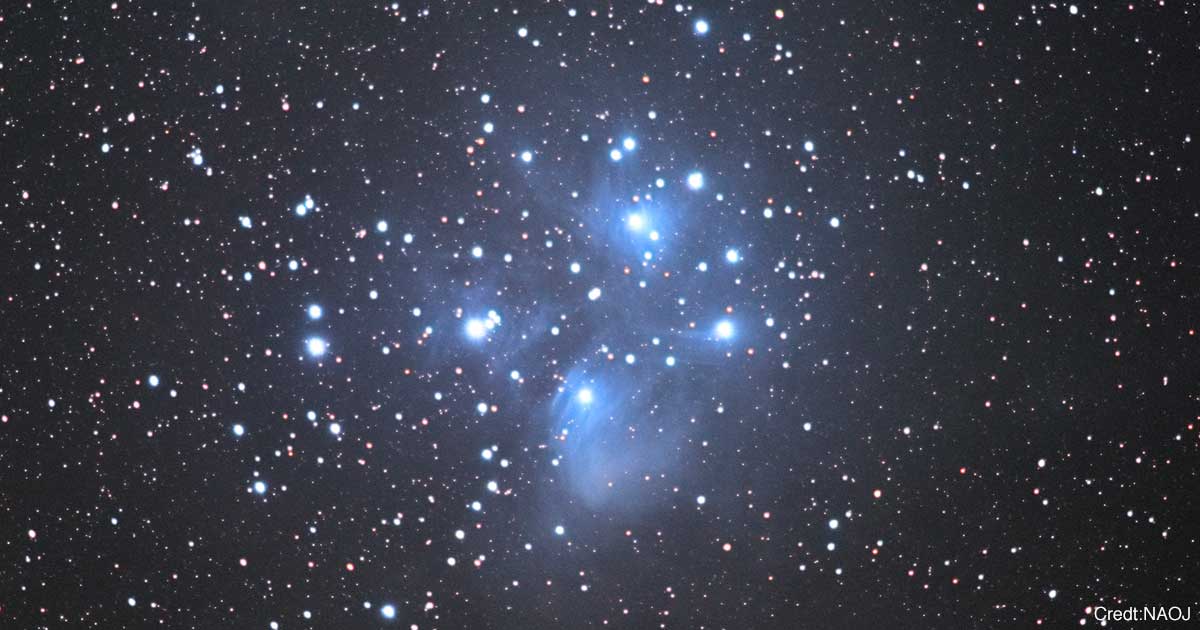
メシエ天体 | 国立天文台(NAOJ)
国立天文台が撮影したメシエ天体の画像を掲載しています。
www.nao.ac.jpTypes of Objects in the Catalog
The Messier catalog isn't one type of object -- it's a mix of nebulae, star clusters, and galaxies. M42 is the Orion Nebula, M45 is the Pleiades open cluster, and M31 is the Andromeda Galaxy. They look different, and the way you enjoy them differs too.
That variety actually works in a beginner's favor. Open clusters show recognizable groupings of stars and deliver a sense of accomplishment even through binoculars. Globular clusters reveal a "fuzzy ball" through small telescopes. Galaxies and emission nebulae tend to appear fainter, but the famous ones are often straightforward to locate, making them solid practice targets as you build comfort with the night sky. At public star parties, I usually start with open clusters or bright nebulae -- they get the most immediate, unfiltered reactions from first-time observers.
The catalog also skews toward objects that work well with binoculars and small telescopes. A 7x50 binoculars have an exit pupil of about 7.14 mm, which produces a bright image under dark skies, making it easier to pick up extended clusters and large nebulae. Switch to a small telescope and you can first take in the full view at low power, then bump up the magnification slightly to examine shapes and structures. You won't see the vivid colors or photographic spiral arms, but as a gateway to the "universe you can see with your own eyes," Messier objects are hard to beat.
💡 Tip
The Messier catalog isn't exclusively a list of bright objects, but it's a generous starting set for anyone exploring deep-sky targets for the first time. Begin with star clusters that binoculars can resolve, then graduate to nebulae and galaxies.
Why the Numbers Don't Match the Seasons
One of the first stumbling blocks with Messier objects is assuming that going in numerical order means going in seasonal order. It doesn't. The numbers reflect the order Messier recorded them, so the number has nothing to do with when an object is best observed.
Winter favorites like M42 and M41 sit alongside spring target M44, summer standout M13, and autumn's prominent M31. Even among the brightest Messier objects, their peak visibility is scattered across the calendar. If you plan observations by number alone, you'll end up pointing at objects that are too low or haven't risen yet.
In practice, "which season, which direction, how high" matters far more than "which M-number." The real advantage of the Messier catalog for beginners isn't that you can check off 110 objects in order -- it's that every season offers bright, findable candidates. Think of the numbers as names and track the viewing seasons separately. Once that clicks, the whole list becomes much more useful.
How I Chose These 10 Messier Objects for Beginners
Scoring Criteria at a Glance
These 10 weren't picked just because they're famous. The central question was: how likely is a first-timer to succeed? Findability carried the most weight, and that means more than raw brightness. I factored in whether the object has enough angular size to register visually, whether bright guide stars sit nearby, and how easily a star chart app can point you to it. M41, for instance, scores well because Sirius marks a spot just 4 degrees north. M45 and M44 are immediately recognizable as groupings at low power -- strong advantages for newcomers.
The weighting, in plain terms, runs like this: "Findability" > "How it looks in binoculars and small scopes" > "Seasonal spread" > "Urban success rate." Open clusters tend to rank high because binoculars clearly show their grouped stars, and that first-time payoff is real. M45, M44, M35, M41, and M7 all pair well with the wide field and bright image of 7x50 binoculars, keeping the flow from acquisition to enjoyment unbroken.
Small-telescope performance was scored independently. With a 60-80 mm aperture, satisfaction comes down to whether you can take in the whole object at low power, then nudge the magnification up for a richer impression. Higher isn't always better -- a useful magnification range is roughly 0.5x to 1x the aperture in mm, with a theoretical maximum around 2x the aperture. For an 80 mm scope, that means 40-80x is your comfort zone, with 160x as the ceiling. For most beginner deep-sky targets, though, objects like M42 and M31 are best enjoyed at 20-30x, where you can take in the full extent. Push the magnification too early and the field of view shrinks, leaving you staring at blank sky wondering where the object went.
Seasonal spread was non-negotiable. Since Messier numbers don't follow the calendar, a list that clusters in winter or summer alone isn't practical. I spread the selections across autumn, winter, spring, and summer, favoring objects that transit at a comfortable altitude. Autumn has M31, winter offers M42, M41, M35, and M45, spring brings M44, and summer delivers M13, M8, and M7. Each season gives you at least one "try it tonight" target. Objects that hug the southern horizon were penalized -- even impressive ones are tough for beginners when they're fighting atmospheric murk.
Handling Objects That Struggle in Urban Skies
The selection deliberately accounts for how realistic each object is from a city. Some famous Messier objects crumble under 光害, especially faint galaxies where you'll see nothing but the core -- or lose the object entirely. From urban sites, bright star clusters and powerhouses like M42 dominate. Move to the suburbs and options multiply. Under truly dark skies, faint outer structure comes alive. That gradient is too significant to ignore.
So "it's spectacular from a dark site" alone wasn't enough to earn a spot. I prioritized objects that register from urban locations or at least reward you from suburban skies. M31, for example, is a classic -- but from the city, forget the sweeping spiral arms of photographs. What you'll actually see is a soft, elongated glow around the core. M8 is a summer highlight, but it sits low and suffers from 光害, making it tough in urban settings. It still made the list because from suburban or darker skies, it delivers, and it fills an important seasonal slot.
On the flip side, objects that are too faint got cut, no matter how famous. The textbook case is M74: a well-known spiral galaxy, but from a typical suburban site with beginner equipment, it's the kind of target where you'll stare at the spot, see nothing, and wonder what went wrong. For the first 10, "success slots" matter more than "challenge slots."
This matches what I see at star parties. From a park with ambient city glow, M45 and M44 get instant reactions through binoculars, but a faint galaxy prompts "is this really it?" The same famous object can range from trivial to brutal depending on your site. Each object description below factors in that reality. In short, this list centers on objects with a high success rate once you include observing-site conditions, not just "impressive under perfect skies."
ℹ️ Note
The easiest first wins from urban sites come from open clusters and bright emission nebulae. Galaxies, even famous ones, tend to appear faint, and binocular detection alone may not match the photographic impression.
Calibrating Expectations: Photographs vs. What Your Eyes Actually See
The 10 objects were selected for visual satisfaction, not photographic appeal. This matters for a beginner-oriented guide, because astrophotographs set expectations that the eyepiece can't match. The rich reds, blues, and defined spiral arms in long-exposure images simply don't appear at the telescope. Visual observing is about extent, contrast, and the texture of star groupings -- not color.
Every object description below includes a note on how it looks visually versus photographically. M42 won't glow in deep crimson; instead, you'll see a gray-white luminosity spreading like wings from a bright core. M31 won't show spiral structure; the experience is about sensing the enormous, faint ellipse filling your field of view. M13 in photographs is a dazzling sphere of resolved stars, but through a 60-80 mm scope, it starts as a bright, round smudge -- under good conditions, a grainy texture emerges around the edges.
Equipment-specific views matter here too. 7x50 binoculars, with their ~7.14 mm exit pupil, produce a bright image well suited to acquisition and big-picture orientation. Extended objects like M45, M44, and M31 benefit especially -- you're not chasing detail, you're registering "what kind of thing is this?" Small telescopes push one step further, revealing cluster density and nebular contours. But for deep-sky work, resist the urge to crank magnification. The 20-30x sweet spot for M42 and M31 is stated explicitly because chasing a photographic-style close-up leads nowhere with these objects.
Building this expectation calibration into the selection criteria naturally elevated objects that satisfy visually even when they look modest in photographs. Open clusters are strong for beginners precisely because "stars grouped together" reads instantly -- no color required. Galaxies can be stunning in photos yet appear as pale smudges to the eye, demanding some interpretive effort from the observer. The 10 objects below are chosen to minimize that gap: each one delivers a clear "I saw it" moment even when you know what the photos look like.
The 10 Best Messier Objects for Beginners
The Messier catalog contains 110 objects in total. Arranging the beginner-friendly highlights by season makes observation planning straightforward. Below, each object gets a quick-reference table covering practical data. The design separates objects that work best in binoculars, those that reward a 60-80 mm telescope, and those that are tougher from the city but transform under darker skies.
M31 -- Andromeda Galaxy
| Object / M-Number | Type | Best Season | Primary Equipment | Difficulty | Appearance (Binoculars / Telescope) | Beginner Notes |
|---|---|---|---|---|---|---|
| Andromeda Galaxy / M31 | Spiral galaxy | Autumn | 7x50 binoculars, small telescope | Level 3 | Through binoculars, it appears as a large, elongated, faint glow -- easy to locate. Through a telescope, the core brightens noticeably, while the outer extent may exceed your field of view. | Don't expect the spiral arms you've seen in photographs. The experience here is sensing the sheer scale of the galaxy. From the city, you'll likely see only the core region -- watch for 光害. Equipment note: 20-30x low magnification gives the most satisfying view. Note: Distance is approximately 2.5 million light-years. |
M45 -- Pleiades
| Object / M-Number | Type | Best Season | Primary Equipment | Difficulty | Appearance (Binoculars / Telescope) | Beginner Notes |
|---|---|---|---|---|---|---|
| Pleiades / M45 | Open cluster | Autumn-Winter | 7x50 binoculars | Level 1 | Binoculars frame a scattering of bright stars beautifully -- the full cluster is immediately recognizable. A telescope magnifies a portion, but binoculars give you the complete picture. | Visible to the naked eye as "Subaru" in Japanese tradition, and one of the most beginner-friendly objects in the sky. The blue reflection nebulosity from photographs won't show visually; enjoy the elegant arrangement of stars instead. Note: Binoculars preferred. |
M42 -- Orion Nebula
| Object / M-Number | Type | Best Season | Primary Equipment | Difficulty | Appearance (Binoculars / Telescope) | Beginner Notes |
|---|---|---|---|---|---|---|
| Orion Nebula / M42 | Emission nebula | Winter | 7x50 binoculars, small telescope | Level 1 | Binoculars reveal a soft glow spread across Orion's Sword. A telescope brings out the bright core and wing-like structure. | The single best object for giving a beginner the feeling of "I just saw a nebula." Forget the deep crimson of photographs -- visually, it's a gray-white luminosity spreading outward. Equipment note: 20-30x low magnification is ideal for grasping the full extent. Note: Distance is approximately 1,300 light-years. |
M41 -- Open Cluster
| Object / M-Number | Type | Best Season | Primary Equipment | Difficulty | Appearance (Binoculars / Telescope) | Beginner Notes |
|---|---|---|---|---|---|---|
| M41 | Open cluster | Winter | 7x50 binoculars, small telescope | Level 1 | Through binoculars, the cluster registers immediately as a knot of stars near Sirius. A telescope tightens the grouping and brings out the cluster character. | Sirius acts as a brilliant signpost, making acquisition straightforward -- this object has a high success rate at public star parties. It won't be flashy, but you'll clearly sense stars gathered together. Note: Positioned about 4° south of Sirius, offering a straight-line hop from one of the brightest stars in the sky. |
M35 -- Open Cluster
| Object / M-Number | Type | Best Season | Primary Equipment | Difficulty | Appearance (Binoculars / Telescope) | Beginner Notes |
|---|---|---|---|---|---|---|
| M35 | Open cluster | Winter | 7x50 binoculars, small telescope | Level 1 | Binoculars show a soft spread of fine stars that fits comfortably at low power. A telescope reveals the sheer number of member stars and increases the sense of density. | A natural stepping stone from binoculars to a small telescope. Rather than individual stars popping out as they do in photographs, the visual impression is a sparkling clump of starlight. Note: Binoculars preferred. Distance is approximately 2,570 light-years, with roughly 500 member stars. |
M44 -- Beehive Cluster (Praesepe)
| Object / M-Number | Type | Best Season | Primary Equipment | Difficulty | Appearance (Binoculars / Telescope) | Beginner Notes |
|---|---|---|---|---|---|---|
| Beehive Cluster / M44 | Open cluster | Spring | 7x50 binoculars | Level 1 | Binoculars fill the field with scattered stars -- a satisfying full-frame view. A telescope tends to crop the scene. | To the naked eye it's a hazy patch, but the moment you raise binoculars, it dissolves into a cluster. Color differences aren't as pronounced as in photos, but you'll get that wonderful impression of stars welling up across the field. Note: Binoculars preferred. |
M13 -- Great Globular Cluster in Hercules
| Object / M-Number | Type | Best Season | Primary Equipment | Difficulty | Appearance (Binoculars / Telescope) | Beginner Notes |
|---|---|---|---|---|---|---|
| Great Globular Cluster in Hercules / M13 | Globular cluster | Summer | Small telescope | Level 2 | Binoculars show a round, fuzzy glow. A telescope reveals a bright, concentrated sphere; under good conditions, a grainy texture appears around the edges. | The defining introduction to globular clusters. Don't expect the fully resolved starfield of photographs -- start by recognizing the dense, round core of light, and the visual experience will make sense. Magnification depends heavily on aperture and atmospheric stability (シーイング). With a beginner-class 60-80 mm scope, begin at 40-80x to establish the shape, then raise magnification in steps only when conditions are very good, searching for granularity. |
M8 -- Lagoon Nebula
| Object / M-Number | Type | Best Season | Primary Equipment | Difficulty | Appearance (Binoculars / Telescope) | Beginner Notes |
|---|---|---|---|---|---|---|
| Lagoon Nebula / M8 | Emission nebula | Summer | 7x50 binoculars, small telescope | Level 3 | Through binoculars, a faint glow appears within the Milky Way band. A telescope brings out the nebula's shape and its embedded star cluster a bit more clearly. | A prominent summer target, but city glow erases the fainter regions easily. The red emission visible in photographs doesn't translate visually; expect a soft, bright nebular haze. Note: Best observed where the southern horizon is unobstructed. |
M22 -- Globular Cluster
| Object / M-Number | Type | Best Season | Primary Equipment | Difficulty | Appearance (Binoculars / Telescope) | Beginner Notes |
|---|---|---|---|---|---|---|
| M22 | Globular cluster | Summer | Small telescope, 7x50 binoculars | Level 2 | Binoculars show a round, bright patch that's straightforward to identify. A telescope brings out a concentrated globular character distinct from M13. | One of the more accessible globular clusters for summer observing. Precise figures for visual 等級, distance, and angular diameter vary between sources; for exact values, consult databases such as SIMBAD or NED. Visually, rather than a fully resolved starfield, expect a bright, compact sphere of light. |
SIMBAD Astronomical Database - CDS (Strasbourg)
simbad.u-strasbg.frM7 -- Ptolemy's Cluster
| Object / M-Number | Type | Best Season | Primary Equipment | Difficulty | Appearance (Binoculars / Telescope) | Beginner Notes |
|---|---|---|---|---|---|---|
| Ptolemy's Cluster / M7 | Open cluster | Summer | 7x50 binoculars | Level 1 | A large, bright cluster fills the binocular field beautifully. A telescope struggles to frame it all -- binoculars give the better view. | Even low on the southern horizon, this cluster stands out and delivers immediate visual reward during summer binocular sessions. Photos emphasize density, but visually it's a wide, bright scattering of stars to take in as a whole. Note: Binoculars preferred. Located near the tail of Scorpius; a large open cluster that binoculars frame in its entirety. |
⚠️ Warning
As a practical rule: open clusters work best in binoculars, globular clusters benefit from a small telescope, and M31 and M42 reward low-magnification views of the full extent. If your priority is a confident first success, start with binocular-friendly objects like M45, M35, M44, and M7.
Finding All 10: A Step-by-Step Method Using Star Chart Apps and Guide Stars
The key idea in this section is replacing "somewhere around there" with a fixed sequence you follow every time. At star parties, the people who can't find anything are almost always the ones who jumped straight to the telescope eyepiece. In practice, confirming conditions and position first, acquiring in a wide field, and only then increasing magnification works far better. The sequence: 1. Check the date, direction, and altitude 2. Confirm position with a star chart app 3. Hop from guide stars 4. Acquire with binoculars 5. Switch to the telescope for magnification.
Step 1: Pre-Check the Date, Direction, and Altitude
First question: is tonight's target actually in a favorable position? Even famous Messier objects become difficult when they're low on the horizon or competing with a bright Moon. Before heading out, I always note the target's transit time, its general compass direction, and roughly how high it will be. That alone cuts down on confusion at the site.
Checking moonrise, moonset, and the end of astronomical twilight through a resource like the National Astronomical Observatory of Japan's ephemeris calculator (or the USNO's data services for North America) tightens your plan. Winter's M42, for example, is well placed in the early evening, while summer's low-altitude targets lose presence if twilight lingers. Matching the time the sky gets truly dark with the time your target reaches a comfortable height -- that's the core of pre-planning.
国立天文台 天文情報センター 暦計算室
eco.mtk.nao.ac.jpStep 2: Confirm Position and Transit Time with a Star Chart App
Next, open your star chart app -- but the app alone isn't enough. If your location data, clock, or time zone is off even slightly, the display won't match the actual sky. Smartphone compass readings can drift, so calibrate your compass and then verify that a bright star on screen matches a bright star overhead. Once those align, you're working with reality.
When I look at the app, I don't focus on the target itself first. I look for the nearest bright star or a distinctive pattern nearby. Most Messier objects don't jump out as standalone features -- they sit within recognizable star patterns, and memorizing their position relative to those patterns is faster. Note how many degrees from the guide star, and in which direction. That mental model pays off the moment you look up from the screen.
Step 3: Hop from Guide Stars
Now the real acquisition begins. Beginners succeed more often when they hop from a bright guide star rather than trying to locate the target directly. This is star-hopping, and it doesn't need to be complicated. Start at a prominent star, then shift your gaze along the pattern you saw in the app.
The trick is to stay loose at first. Begin with "somewhere in this constellation, in this area," then narrow: "just below that guide star," "inside the trapezoid," "halfway between those two bright stars." What trips most beginners up is staring at stars without organizing them into shapes. Instead of trying to overlay app lines onto the sky, think in triangles, W-shapes, trapezoids, and straight lines. Geometric patterns stick.
Step 4: Acquire with Binoculars and Lock the Position
Once you've traced the path from guide stars, bring binoculars to your eyes. Their wide field of view gives you a major advantage over the telescope at this stage. Open clusters, large nebulae, and extended objects like M31 are often easier to detect first through binoculars.
At star parties, it's common to see people struggle because they skipped straight to the telescope. A binocular confirmation of "it's right here" gives the target a solidity in your mental map of the sky. I routinely check extended objects with binoculars first -- shape, surrounding star field -- before switching to the telescope. With the position locked in, the handoff to higher magnification goes smoothly.
⚠️ Warning
To improve your acquisition success rate, treat binoculars less as an instrument for visual enjoyment and more as a position-confirmation tool. That mindset alone reduces failures.
Step 5: Telescope at Low Power, Then Increase as Needed
With the binocular position confirmed, switch to the telescope. The critical rule: don't start at high magnification. Deep-sky objects become harder to find as the field of view shrinks, and you lose the overall structure. Begin at 20-30x, confirm the object is in the field, and only then step up magnification gradually. This approach works reliably even for people who are still getting comfortable with a telescope.
This sequence is especially effective for extended objects like M42 and M31, but it works for globular clusters too -- confirming M13 as a round glow at low power before adding magnification keeps the experience calm and controlled. In my own observing, the "found it" moment is stronger at low power; stepping up to medium magnification then deepens the impression. For globular clusters, a modest increase brings out the concentrated core, and on good nights M13 starts to show a grainy edge.
Worked Examples
To make the method concrete, here are acquisition walkthroughs for five of the beginner 10.
- M42
Look below Orion's Belt at the "Sword" asterism. Even the naked eye may detect a fuzzy glow at the Sword's center; binoculars immediately reveal nebular extent. Among winter targets, this is the highest-confidence first acquisition.
- M31
Use Cassiopeia's W as your anchor. Extend the line of the W toward Andromeda, and the position falls into place. Under dark skies, binoculars pick up the faint elliptical glow. Because the galaxy is enormous, approach it by asking how far the glow extends rather than searching for detail.
- M44
Find the midpoint between Cancer and the bright stars Pollux (Gemini) and Regulus (Leo). To the naked eye it's a hazy smear; binoculars dissolve it into individual stars.
- M13
Locate the Keystone asterism in Hercules -- four stars forming a distinct trapezoid. The cluster sits along one side, inside the figure. The Keystone's recognizable shape makes it one of summer's most reliable guide patterns. Binoculars reveal a round smudge; a telescope resolves a concentrated, spherical mass.
- M41
Sirius, the brightest star in the sky, sits roughly 4° north -- a dead-simple starting point for winter star-hopping practice. Drop the binoculars slightly below Sirius and the cluster's concentrated patch of stars usually appears right away.
The thread connecting all five: don't chase the object's name -- identify the guide-star pattern first. At the eyepiece, sequence beats equipment. Confirm position in advance, verify with an app, hop from guide stars, lock with binoculars, and then move to the telescope. Once that flow is second nature, the beginner Messier objects open up quickly.
How Binoculars and Small Telescopes Change the View
The Strengths and Technique of Binoculars (7x50 Class)
The appeal of 7x50 binoculars is the balance between brightness and field of view. At star parties, I usually hand someone binoculars before pointing them at a telescope -- the wide field lets them connect guide stars to target in one sweep, and "where is it?" suddenly has a spatial answer.
Open clusters and large nebulae are the best match. M45 and M44 look better in binoculars than through a telescope set to higher magnification -- you see the cluster as a unified whole. M31 works similarly: binoculars register it first as a large, faint elliptical presence, functioning as an acquisition tool before you switch to higher power. Stop expecting the photographic spiral and instead savor the sensation of a luminous island floating in the sky -- that reframing eliminates most of the expectation gap.
The technique with binoculars is to read the overall mass rather than chase detail. M35 contains roughly 500 stars spread across a generous area, but rather than counting individual points, perceive it as "a region dense with fine stars." Under dark skies, the binocular field seems to bloom with additional stars -- that unfolding is the most rewarding part of binocular deep-sky observing.
What a Small Telescope (60-80 mm) Reveals
Stepping up to a 60-80 mm telescope takes you from the "there or not there" stage into distinguishing shape and density. Open clusters gain some separation between stars; nebulae show contrast between bright and faint zones. M42, which was a soft glow in binoculars, starts to suggest wing-like structure through the scope.
Globular clusters show the biggest jump. M13 in binoculars is a bright smudge, but through a 60-80 mm scope the sense of stars packed tightly toward the center becomes unmistakable. You won't match the resolution of a large aperture, but the concentrated character of a globular cluster comes through clearly at this class. If open clusters are about the beauty of arrangement, globular clusters are about the thrill of density.
Magnification discipline matters here. A practical working range for a 60-80 mm scope is roughly 0.5x-1x the aperture in mm. The theoretical ceiling is aperture(mm) x 2, but for deep-sky targets you'll usually be happier in the low-to-mid range. Higher magnification dims the image and shrinks the field, making acquisition itself harder. My own rule at the eyepiece: start low, confirm the full extent, and add magnification only as needed.
💡 Tip
For extended objects like M42 and M31, 20-30x low-power viewing captures the highlights best. Over-magnifying doesn't reveal more -- it erases the big picture.
Matching Equipment to Each Target Type
The equipment pairings are fairly clear-cut. Open clusters belong in binoculars. M45, M44, and M35 -- all with generous angular extent -- look their best when the 7x50 field frames them whole. A telescope can show them too, but you're cropping the scene. Binoculars give you the natural "star grouping" impression.
Globular clusters, on the other hand, gain significantly from a small telescope. M13 transitions from a round spot in binoculars to a core that brightens inward, with a gritty texture at the periphery. That's where the globular-cluster experience starts to click: the moment it stops being "just a smudge."
Nebulae and galaxies share the "faint object" label but behave differently. M42, a bright nebula, delivers real presence through a small scope -- 20-30x lets you trace the shape. M31, a galaxy, is easy to acquire even in binoculars, but the gap with photographs is wider, and the experience centers on extent rather than detail. Galaxy appearance is driven more by sky darkness than equipment; a darker site does more than a bigger scope.
Magnification choice simplifies when you tie it to target size. Large objects get low power. Compact objects get a modest bump. M42 and M31 at 20-30x for the full view. M13 at medium magnification once you've confirmed position. Open clusters -- resist the temptation to magnify. Follow that logic, and the equipment difference stops being about "visible vs. invisible" and becomes about "what's the highlight of this particular target."
Setting Up for Success: Moon Phase, Twilight, and Light Pollution
Reading the Moon Phase and Moonrise/Moonset
The single most effective thing you can do for Messier observing is avoid moonlight. Galaxies and faint nebulae are decided more by sky darkness than by equipment. If you can choose your date, aim for nights near the new Moon. Around full Moon, the entire sky washes out, and binoculars produce a steady stream of "it should be right here but I can't see it."
The often-overlooked detail is moonrise and moonset, not just the phase. First- and last-quarter Moons don't necessarily ruin the whole night. Some evenings the Moon sets early; other nights it doesn't rise until the small hours. Once the Moon drops below the horizon, the sky can tighten dramatically. I've had nights where I wrote off conditions because of the Moon, only to watch M31 and faint open clusters snap into view the moment it set.
For planning, check moonrise and moonset times using a resource such as the USNO data services or the National Astronomical Observatory of Japan's ephemeris calculator. Anchor your plans around the new Moon, then look at how many dark, moonless hours you actually get. That one step eliminates a large share of wasted outings. Beginners tend to focus on what gear to bring; for deep-sky work, "when does it get dark?" matters more.
Why You Should Wait for Astronomical Twilight to End
Even a moonless evening isn't automatically ideal. For deep-sky observing, whether astronomical twilight has ended makes a real difference for faint targets. Astronomical twilight lasts until the Sun drops to -18 degrees below the horizon. During this period the sky looks dark to casual observation, but a faint residual brightness remains in the background. Bright star clusters will show through, but faint galaxies and nebulae can disappear into that glow.
The reliable observing window is not "when it feels dark" but after astronomical twilight ends. In spring and summer, you may think enough time has passed since sunset, but the sky hasn't fully committed to darkness. Autumn and winter darken earlier, so the same clock time can mean very different conditions.
A common field experience: bright stars overhead look fine, but low-contrast deep-sky targets refuse to appear. More often than not, that's residual twilight, not an equipment or technique problem. Since the end time shifts with the seasons, checking it for your specific date saves real frustration.
ℹ️ Note
Deep-sky objects don't follow a "clear sky = visible" rule. They need both a Moon-free sky and completed astronomical twilight before they really open up. For galaxy hunting in particular, this distinction directly determines your success rate.
Light Pollution, the Bortle Scale, and mag/arcsec^2
The other major factor is 光害. Attempting Messier objects from a city, you'll enjoy bright open clusters and powerhouses like M42, but faint galaxies become an exercise in frustration. Even M31, one of the most famous objects in the sky, may yield only a feeble central glow from downtown -- hardly the "I saw a galaxy" moment you're after. Driving to the suburbs can dramatically improve success, and the reason is simple: the sky background brightness matters more than your equipment.
For a rough common language, the Bortle scale is widely used, but for a more objective measure, mag/arcsec^2 (mag per square arcsecond) is useful. It quantifies the sky background brightness: higher numbers mean darker skies. Japan's Ministry of the Environment references this metric in their "Let's Watch the Stars" program, and similar measurements are used by dark-sky advocacy groups worldwide.
As a benchmark, roughly 22 mag/arcsec^2 represents a near-natural dark sky, while below about 21 mag/arcsec^2, the Milky Way starts to fade noticeably. You don't need a meter to act on this -- it maps cleanly onto practical experience. Urban: faint objects sink into the background. Suburban: bright Messier objects hold steady. Dark rural site: nebulae and galaxies show their full extent.
At star parties, using the same binoculars in different locations produces starkly different reactions. From the city, the conversation is "did I see it or not?" From the suburbs, it becomes "I can make out the shape." From a dark site, "it extends way further than I expected." If you struggled with a target, don't blame the object -- the sky was likely the limiting factor.
A Note on the Messier Marathon Season
The Messier Marathon -- attempting as many of the 110 objects as possible in a single night -- is where observation-condition awareness pays off most visibly. The prime window in the Northern Hemisphere falls in March-April, when late-winter objects still linger in the west at dusk while spring and summer objects are already rising in the east before dawn. Weekends near the new Moon are preferred because moonlight avoidance is critical.
For 2025, the primary window was around March 22-23 with a backup of March 29-30 (new Moon fell on March 29). These dates shift yearly with the lunar cycle, so always recalculate for the current year.
In practice, the marathon isn't just a numbers game -- it's outstanding training in reading Moon phase, twilight, and 光害. Objects caught low in the west at dusk or low in the east before dawn become dramatically harder with even a slight brightening of the sky. Building the habit of diagnosing "why can't I see this?" as a Moon, twilight, or sky-brightness issue rather than a gear issue makes all your future observing sessions more productive.
Your Observing Plan for Tonight
Tonight, resist the urge to chase everything. Picking 1-3 targets gives you the best shot at genuine success. At the site, if the first object doesn't cooperate within a few minutes, move on rather than grinding -- the experience improves immediately. My star-party approach: lock in one easy win first, then add more only if time and conditions allow. The workflow: pick tonight's prime target from the seasonal 10, check moonrise/moonset and twilight end times, preview positions in a star chart app, and start by acquiring with binoculars.
Autumn Route: M31 then M45
Autumn works best when you start with a wide, binocular-friendly target. M31 first: once you've located Andromeda, the galaxy registers as a large, faint elliptical glow. Even on nights when the naked eye can't pick it up, binoculars usually deliver the "there's a galaxy right here" feeling.
Swing to M45 next, and the contrast in appearance is immediately clear. M45 spans about 2° -- a perfect match for the wide field of 7x50 binoculars. Early autumn, lead with M31; if conditions are marginal, pivot to M45 as the main event. Two targets, no rush, real satisfaction.
Winter Route: M45, M42, M41, M35
Winter is the most generous season for beginners. Start with M45 to settle in, then move to M42 for the "I just saw a nebula" moment. M42's position in Orion's Sword is easy to find, and binoculars show a soft glow immediately. With a small telescope, switch to low magnification and trace the shape.
If time allows, add M41 -- Sirius makes the hop trivial, and it's an excellent secondary target. Still going? M35 rounds things out: roughly 500 member stars, and binoculars show the cluster as a satisfying knot of light. That said, four targets in one night isn't the goal. My recommendation for a first winter outing: M45 and M42. Comfortable? Add M41. Sky cooperating? Go for M35.
Spring Route: M44 then M13
Spring looks sparse but is ideal for focused practice. M44 first -- binoculars dissolve the hazy naked-eye patch into scattered stars, an easy and pleasant acquisition. The Beehive spans about 1.5° and has a light, airy quality through binoculars that suits the season.
From there, M13 introduces the entirely different character of a globular cluster. It starts as a small, round glow, but upgrading from binoculars to a small telescope deepens the impression noticeably. Spring observing works perfectly well as a single-target session with M44. If you want to push further, M13 makes a clean two-object evening.
Summer Route: M8, M22, M7, M13
Summer targets cluster along the Milky Way, so once you establish a sequence, the flow comes naturally. M8 opens with nebular glow, and M22 follows for a globular-cluster contrast -- same season, very different visual experience. M22 is included here as a convenient next step in the Sagittarius region; treat it as "the nearby globular" rather than worrying about precise catalog stats.
M7 comes next and is immediately rewarding: a bright, expansive open cluster that binoculars frame beautifully. With time and altitude left, close with M13 to round out the summer's signature globular. But even one or two of these is plenty for a first summer session. If something isn't cooperating, hop to the next Milky Way target nearby -- keep the pace light and you'll stick with the hobby.
Gear and Safety Checklist
Observation quality depends less on equipment than on not forgetting the basics. At minimum: 7x50 binoculars or a small telescope, a star chart app for position reference, and a red flashlight for preserving night vision. Binoculars give you the highest success rate on your first target and the most stable "start here" option.
Beyond optics, cold drains focus fast. Warm layers, a ground sheet, hand warmers, and a hot drink are practical necessities, not luxuries. Even a "quick look" session outdoors means standing still and looking up -- you'll cool down faster than you expect. On the safety side, scout your parking spot, path to the observing area, and restroom access while it's still light. That removes the anxiety of stumbling around in the dark.
For detailed views and acquisition guides for individual targets, the Orion Nebula (M42) and Pleiades (M45) binocular observing articles go deeper on field technique.
💡 Tip
For your first outing, set the bar at "one object found = success." Once that one object is in the eyepiece, the path to the next one suddenly becomes much clearer.
Related Articles
How to Start Stargazing: 5 Steps You Can Do Tonight
How to Start Stargazing: 5 Steps You Can Do Tonight
You don't need a telescope to start stargazing. Begin with bright, easy targets like the Moon and Venus, then gradually add binoculars and — if you want — a telescope. Starting with naked-eye objects and building from there is the approach least likely to leave you discouraged.
How to Find Nebulae and Star Clusters | Deep Sky Beginner's Guide
How to Find Nebulae and Star Clusters | Deep Sky Beginner's Guide
Nebulae are clouds of gas and dust, star clusters are groups of stars, and galaxies are massive island universes of stars and gas. Even though the names sound similar, what you see and how you find them differ enough that sorting this out first makes the night sky much more readable.
Stargazing Gear Checklist | 7 Essentials Beginners Always Forget
Stargazing Gear Checklist | 7 Essentials Beginners Always Forget
When it comes to stargazing gear, there are things you should sort out before you even think about a telescope. For your first night under the sky, three things come first: a red light, warmth and insect protection, and a way to find stars. Here are the 7 essentials that beginners consistently overlook.
How to Find the Orion Nebula M42 | Naked Eye, Binoculars, and Telescope Views
How to Find the Orion Nebula M42 | Naked Eye, Binoculars, and Telescope Views
The Orion Nebula (M42) is the most popular deep sky object in the winter sky. This guide walks you through tracing from Orion's Belt to the Sword to find it yourself tonight — with direction and timing references included.